
Miami County Criminal Docket Searches
Begin a district criminal case search at Kansas CaseSearch. Have the exact case number? Use the case-number search. Then confirm the county shows Miami. A citation number works too, when the citation produced a district case. With only a name, pick Party Name. Trim the results by county, case type, status, or filing dates. Check the county and case details before trusting any match. Online access is just one route. The Clerk of the District Court can sort out routing by phone at (913) 294-3326. A public computer at the Miami County courthouse also offers terminal access. Kansas court rules allow it. For a named complaint, order, judgment, or events index, you can file the Kansas court-record request form instead.
- Decide whether the case is district, municipal, federal, or from another county.
- Search the exact case or citation number when possible.
- Set the location to Miami and check the case type.
- Read events in date order, then compare an upcoming setting with the county calendar.
- Use the terminal or clerk request route for a public document missing online.
Miami Criminal CaseSearch Fields
CaseSearch gives you several fields for narrowing a Miami County criminal docket. Exact searches cut down false matches. Still, every field has limits. A municipal citation may sit in a city system. Dropdown labels can change over time. Let the official search controls, not a guessed case format, guide what you type.
| Need | Control | Miami County use |
|---|---|---|
| Exact case | Case number | Enter the MI identifier and select Miami |
| Citation | Citation number | Use if it produced a district case |
| Person | Party Name | Add county, type, status, or date filters |
| Lawyer | Attorney or bar number | Narrow a known case set |
| Posture | Case Type and Status | Separate category and status |
| Period | File Date Start and End | Limit the filing window |
A Miami number may look like MI-YYYY-CR-######. The live result or the clerk's record controls the real format, so never infer digits or a case-type code.
Criminal Dockets: What They Show
A Miami County criminal court docket splits case information from filed court records. The case information side covers the number, type, parties, attorneys, assigned judge, status, hearing dates, and an events index. A complaint, motion, order, or judgment is a document. The portal may list the event yet withhold or lack the paper behind it.
| Case number | The identifier used for exact search and requests. |
|---|---|
| Roles | Defendant, prosecutor, attorney, and sometimes court services. |
| Setting | Date, time, courtroom, judge, and proceeding label. |
| Appearance notes | In person, Zoom, interpreter, stipulated facts, or time allowance. |
| Events | Filed and scheduled activity in sequence, including continuances and orders. |
| Access marker | A limited display or sealed placeholder when details are withheld. |
The Miami County Docket by Date is just a schedule. It can help you find a setting, but it is not a certified record and says nothing about guilt.
Miami Criminal Calendar Stops
Calendar labels in Miami County mark separate stages. A First Appearance is an early court event. Arraignment deals with the charge and the plea process. A Preliminary Examination tests probable cause. Plea Hearing and Sentencing come later, and the label alone never tells you what happened in the courtroom.
- Diversion - Status
- A review of diversion status, not proof of completion or failure.
- Probation - Violation - Status
- A hearing about an alleged supervision violation; the resulting order controls.
- Bond - Appearance
- A setting tied to appearance or bond issues, not a final disposition.
- Bench Trial
- A scheduled trial to the judge rather than a jury.
- Status Conference
- A review of case posture and next procedural steps.
Miami listings may also flag interpreter needs, remote appearance, or allotted time. Those details are logistics. They say nothing about the merits of the charge.
Criminal Case Stages on the Docket
A district criminal case builds a sequence, not one decisive line. The record often opens with a filed complaint and an early appearance. From there it can move through arraignment, preliminary proceedings when required, and motions. Conferences, plea or trial, judgment, and sentencing may follow. Diversion or supervision review may add events later. A reset simply inserts a new date; it does not end the case.
Docket flow: Charge Filed › First Appearance › Arraignment › Pretrial Proceedings › Plea or Trial › Disposition › Sentencing
Always pair a calendar entry with the docket event or order that follows it. A listing that says Sentencing means a sentencing event was set. It does not mean a sentence was imposed. The same goes for Plea Hearing, which is not proof the court accepted a plea. Read what comes after the setting. If the result stays unclear, ask the clerk for the public order.
Miami Missing Criminal Documents
A missing link does not mean a document is sealed. The paper may predate the electronic rollout. It may not have been processed yet. Or it may be barred from internet access while other public material stays available. Check the courthouse terminal next. If the document is public but still absent, send a written request to the Clerk of the District Court.
Be exact: give the Miami County case number, document title, and a date range. Ask for the complaint, order, judgment, or events index rather than an undefined full history.
The clerk can quote a copy cost and explain certification. The Kansas Central Payment Center is no substitute. It processes eligible payments, but a payment result does not reproduce the Miami County criminal docket.
Miami County Criminal Docket Courts
The Miami County District Court holds the county's district criminal cases. It is part of the Sixth Judicial District. Its clerk keeps the events, case files, calendars, copies, and certifications. You will find the courthouse at 120 S. Pearl Street in Paola. Federal cases go through the District of Kansas system, not Kansas CaseSearch. City ordinance charges start in the municipal court named on the citation. Paola, Louisburg, Osawatomie, Spring Hill, and Fontana each keep their own municipal authority and clerk records. So search or call that city first. When a municipal judgment is appealed under K.S.A. 22-3609, a separate district matter may show an Appeal - Municipal event. That event is the roll-up path, not the original city docket.
Note: The court named on the citation is your best clue to the right custodian and search channel.
Complaint and Warrant Access
Kansas Supreme Court Rule 22 draws a clear line. A complaint and an unexecuted warrant sit on opposite sides of the access line. The rule's comments put it plainly. A criminal complaint stays public in the electronic system unless a judge seals it. The unexecuted warrant itself is different. So is the paperwork supporting an arrest or search warrant. Rule 22 and the statutes keep those records restricted.
That split trips up a lot of requesters. A public complaint does not make every warrant paper public. A warrant you cannot see does not mean the complaint disappeared. Name the exact record you want and let the clerk apply the right rule. Presentence reports, grand-jury records, and juvenile-offender files carry their own separate limits. The official Kansas expungement statute lays out another one of those limits.
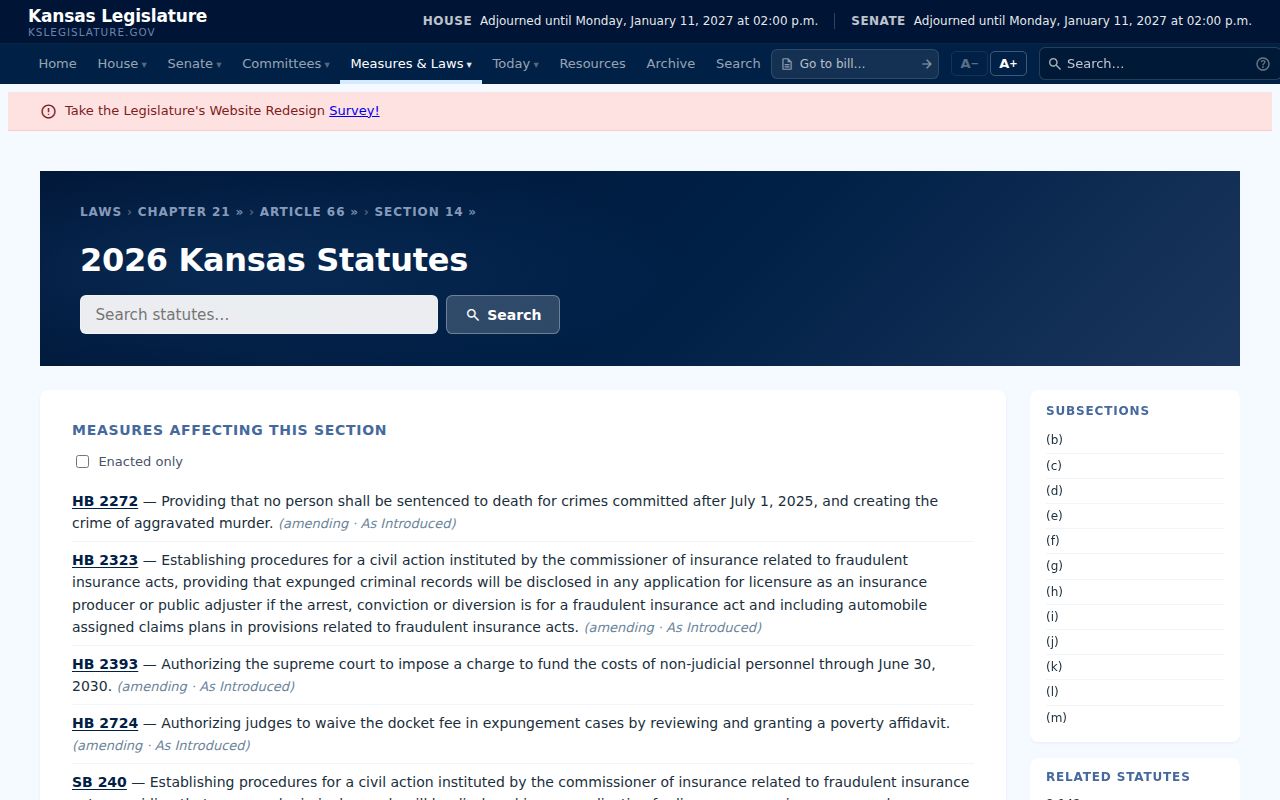
An expunged criminal record will not show up in a normal public CaseSearch result.
Access Rules for Criminal Dockets
Access to a Miami County criminal docket turns on the record itself. The label "criminal" only takes you so far. Rule 22 controls what the portal and courthouse terminals can show. Kansas Supreme Court Rule 24 puts the main redaction duty on the filer. It also shields personal data. Statutes and court orders can layer on more limits. Keep three things separate, too. A case missing from the online docket is not the same as a terminal restriction, and neither one equals a sealed order.
Key access points:
Rule 22 excludes expunged cases, grand-jury proceedings, presentence reports, juvenile-offender papers, unexecuted warrants, and specified warrant support from normal public electronic access.
K.S.A. 45-221 recognizes records not required to be open and permits releasable material to be separated from restricted material.
Sometimes a Miami County calendar shows "********* Sealed *********" where party details would go. That marker is an access boundary, and the docket tells you nothing about what sits behind it.
Read Miami Events Without Guessing
Read a Miami County docket in order, one entry at a time. Start by confirming the county and case number. Sort each event into three buckets: a filing, a setting, or an order. Then hunt for the entry that shows what the court actually did about it. The county offers a warning. Recent continuances and freshly processed hearings may lag behind the reference calendar, so call the clerk when a scheduled date conflicts with the county PDF.
No official local dictionary of disposition abbreviations exists for Miami County. Work from the exact text in the current result or a certified docket. A guessed code proves nothing. Need to check a name or case number first? Run the Miami County docket search process. Then come back to the event sequence once the right case is confirmed.
Miami Criminal Dates and Decisions
Three dates do most of the work in a Miami County criminal docket. The filing date tells you when a complaint, motion, or order reached the record. A setting date marks when the court planned to take up an issue. Then comes the disposition date, which records a result. Keep them apart. One entry rarely answers all three questions. A Plea Hearing does not prove a plea was accepted. A Sentencing entry does not state the sentence. Before drawing any conclusion, find the later docket event or the public order that settles it.
The county calendar also says how a hearing is meant to run. Some entries note an in-person or Zoom appearance. Others list an interpreter, stipulated facts, or a set block like 30 minutes. Party roles can include Defendant, Prosecutor, attorney, and Court Services Officer. Details like these help you prepare and find the right courtroom. They do not show the evidence or establish the judge's ruling.
Miami County publishes no local dictionary of criminal disposition abbreviations. Use the exact label instead. Take it from the current CaseSearch result or the certified docket. If a code stays unclear, ask the district clerk. Ask for the event description or the named public order. Guessing at an expansion is not worth the risk.